Marketing
Who Else Knows What’s in Your Fridge?
Published by Hang Thanh Le · September 27, 2026

Ask most people what’s in their fridge and they’ll guess. Half a carton of milk? Some spinach, probably wilting? For decades, food and appliance brands faced the same problem: to understand how households shop, cook and waste food, they had to ask, through surveys, diaries and focus groups. And people are notoriously bad at remembering what they actually eat.
Samsung’s Bespoke AI Family Hub refrigerator doesn’t ask. It watches. That shift, from what consumers say to what consumers actually do, is the real lesson behind this week’s digital technologies. Using Samsung’s smart fridge as a case, this blog shows how IoT, Big Data and AI work together as one system, and what that means for how marketers think.
From Asking to Observing: A Fridge with eyes
The Family Hub is a textbook Internet‑of‑Things product. The 2026 model has a 32‑inch touchscreen and an internal camera whose AI Vision can read fresh ingredients, packaged food labels and even wine bottles. According to Samsung, the camera captures both what goes into the fridge and what comes out, and the fridge needs a Wi‑Fi connection and a Samsung account to work.
Using Raff, Wentzel and Obwegeser’s (2020) smart product archetypes, the fridge climbs every level. It is digital (it stores and displays information), connected (it syncs with the SmartThings ecosystem and your phone), responsive (it senses items being added or removed in real time) and increasingly intelligent.
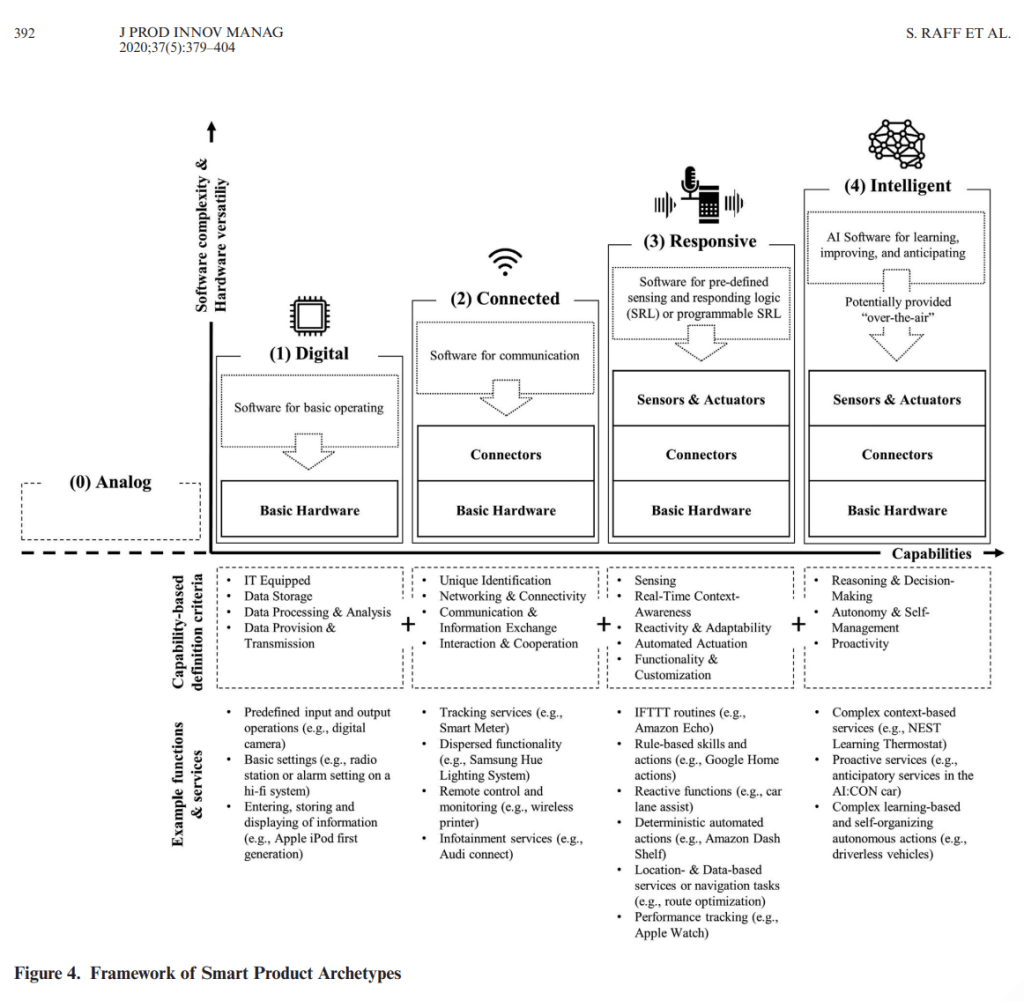
Samsung’s own framing makes this clear: at a 2026 food technology conference, the company contrasted older smart kitchens that simply followed commands with what it calls a “proactive kitchen”.
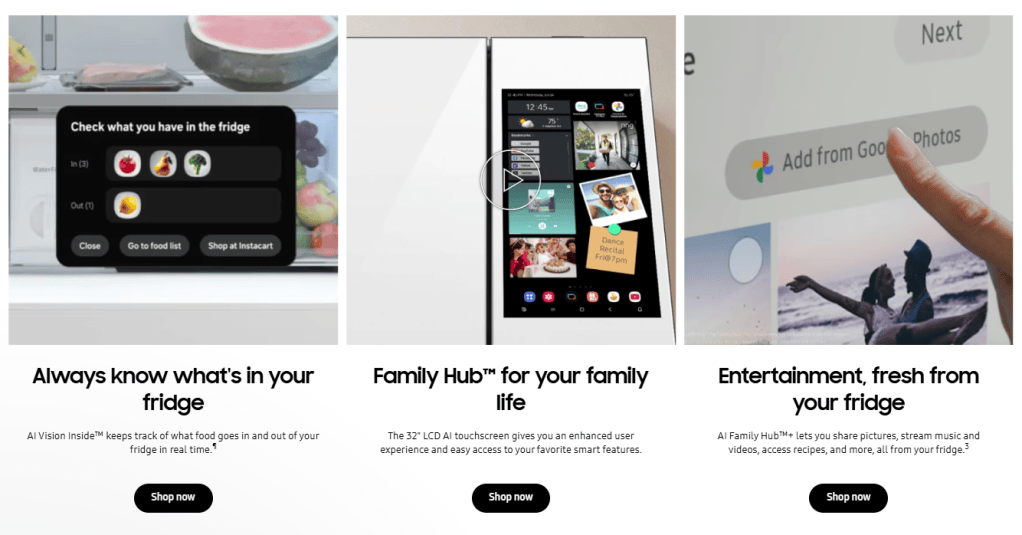
The product also shows how IoT changes the product itself after purchase. In May 2026, Samsung pushed a major over‑the‑network software update that added new AI features to existing fridges without any new hardware. The fridge you bought last year literally gets smarter, which is IoT‑enabled product support and relationship‑building in action.
For marketers, the real value is behavioural data. Traditional segmentation might describe Samsung’s buyer as “affluent families with young children”. A connected fridge enables far more actionable segments: households that buy fresh vegetables every Sunday but throw half away by Thursday, or families who cook the same five meals on rotation. That is behavioural, contextual segmentation, only possible because the product observes rather than asks.
More data isn’t the point: the 6 Vs as a checklist
It’s tempting to assume that a camera inside every fridge means more data and therefore more value. But data on its own doesn’t do much. It only matters when it helps someone make a better decision. This is where the 6 Vs of big data (Gandomi & Haider 2015) earn their place, not as definitions to memorise but as a way to check whether the data is actually worth having.
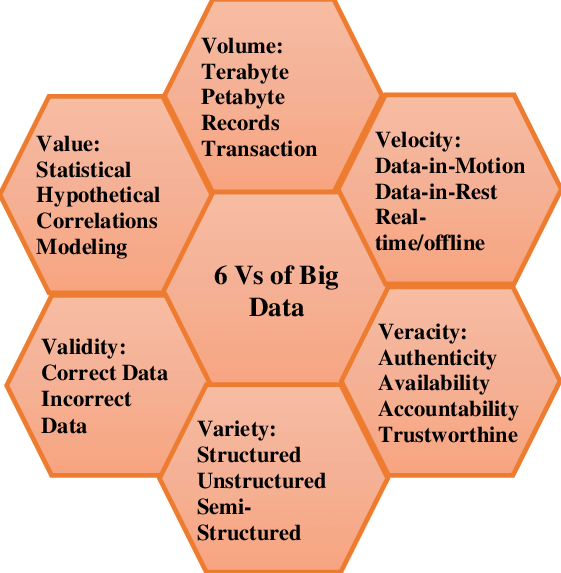
Start with the sheer volume. Every time the door opens, the fridge records something, and across millions of households Samsung ends up with a picture of how entire populations really eat, not just how they say they eat. That picture is also rich in variety, pieced together from camera images, product labels, voice commands, family calendars and recipe choices. And it moves fast. The inventory updates the moment you close the door, so the velocity of the data means tonight’s recipe ideas are based on tonight’s fridge, not last week’s shop.
Speed and scale mean little if the data is wrong, though. Samsung’s own product pages admit that automatic labelling only covers a set list of fresh foods, so anything else may need to be tagged by hand. The veracity problem is easy to picture: a fridge that insists you have eggs when the carton is empty won’t earn much trust. When the data is right, however, its value is obvious. It helps households answer two everyday questions, what should we cook and what do we need to buy, and Samsung pitches its restocking alerts as a way to make grocery planning easier and waste less food. The catch is that eating habits never stand still. They shift with the seasons, school holidays, new diets and busy weeks, and this variability is why Samsung’s Now Brief screen keeps adjusting its suggestions to your location, the time of day and your routines.
There’s one more V worth adding, and it might matter most of all. A camera inside the home, recording a family’s eating habits every day, is about as personal as data gets. That vulnerability means privacy isn’t a legal footnote for Samsung. For many households, it’s the reason they’ll either buy the fridge or walk away from it.
Using AI for the right experience, not the most AI
The interesting part is what happens when AI starts using all this data. Puntoni et al. (2021) describe four ways consumers experience AI, and in Samsung’s fridge, every one of them comes with a benefit and a matching risk.
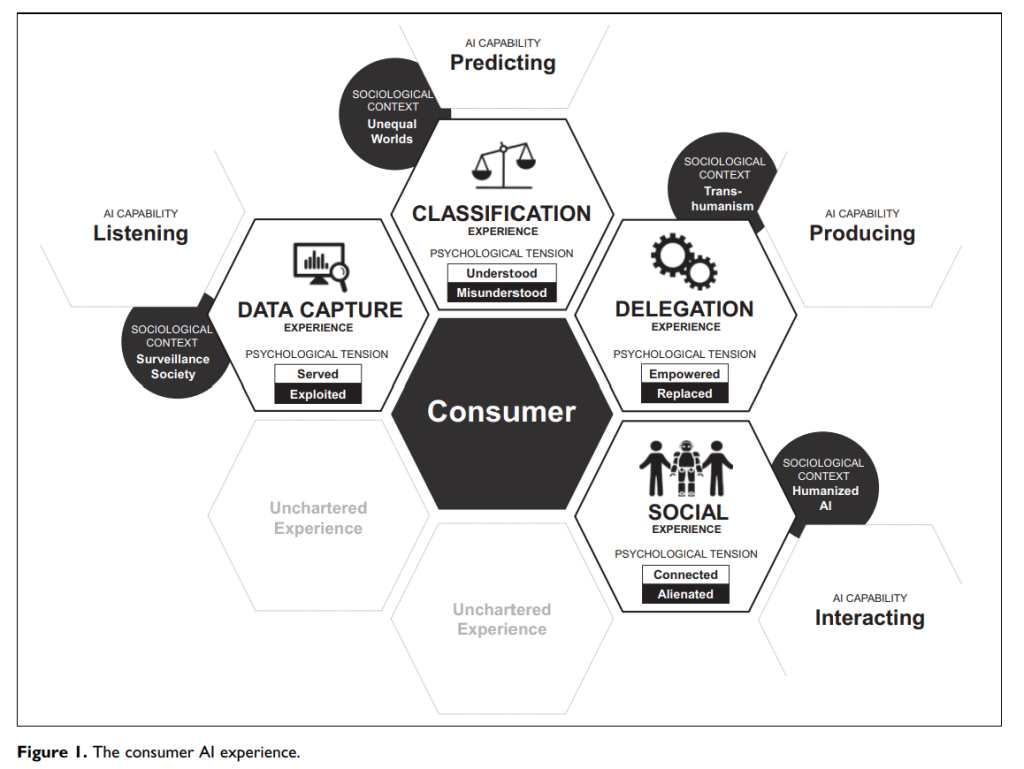
It begins with data capture. The fridge is always watching, quietly logging every carton that goes in or out, and most of the time that feels like a perk. You can check what’s inside from the supermarket aisle without opening the door. Yet the same camera raises an uncomfortable question about where all those pictures of your kitchen end up. Whether a household feels served or exploited depends on the answer, which is why clear permissions and an easy way to delete data matter as much as the camera itself.
Once the data is collected, the fridge starts classifying your household by what it “usually” eats. Its FoodNote widget picks out last week’s most used ingredients and suggests recipes around them. On a good day, that feels thoughtful, as if the fridge really understands you. On a bad day, it feels like being stuck on repeat. The challenge is bigger because a fridge, unlike a phone, is shared. It has to make sense of the teenager living on noodles and the parent trying to eat more greens at the same time, and someone will inevitably feel misunderstood.
From there, Samsung wants the fridge to take on real work. By comparing what you have with your nutrition goals, it can send a recipe straight to the oven with the settings already loaded. For a busy parent at 6pm, delegating dinner like this is empowering. For someone who sees cooking as part of who they are, it can feel like being replaced in something they love. The sweet spot is a fridge that suggests rather than decides, leaving the final call with the person holding the spatula.
The updated Bixby turns the fridge into something you can actually talk to. Asking your kitchen what to cook tonight feels natural and even a little fun, and it can make the whole household feel more connected to the technology. But that only works if the assistant understands everyone, from a grandparent with a strong accent to a child who mumbles. If it doesn’t, the conversation quickly shifts from charming to alienating.
When the system overreaches
The risk here isn’t that the technology fails; it’s that it goes too far. A fridge that constantly nudges you to restock, suggests “healthier” meals or tracks every snack can turn from helpful to intrusive. Classification can become judgement, and delegation can become pressure. The best AI experience is not the one with the most AI; it’s the one where AI sits in the right place in the customer journey. For Samsung, that could mean letting households choose which features are active, explaining why a recipe was suggested, and letting users correct what the fridge thinks they like.
Verdict
The Family Hub shows that IoT, Big Data and AI are not three separate tools but one continuous system. The camera observes what the household eats, data reveals patterns, AI turns them into recipes and shopping reminders, the family changes its behaviour, and that response becomes new data. Even the product evolves through the loop, with software updates adding new capabilities to fridges already in people’s kitchens.
Traditional marketing worked like this: study customers, launch a campaign, hope they respond. Digital marketing works like this: observe behaviour, generate insight, predict needs, act, then learn again. The marketer’s job is not to become a data scientist. It is to know which business problem needs data, which data truly creates value, what AI should do, and just as importantly, what it shouldn’t.
So the real question is: would you let your fridge decide what’s for dinner, or is cooking one thing you’d rather keep human?


Leave a Reply