MARKETING
Sydney Sweeney Has Great Jeans, But Did American Eagle Have a Great Strategy?
Published by Hang Thanh Le · September 6, 2026
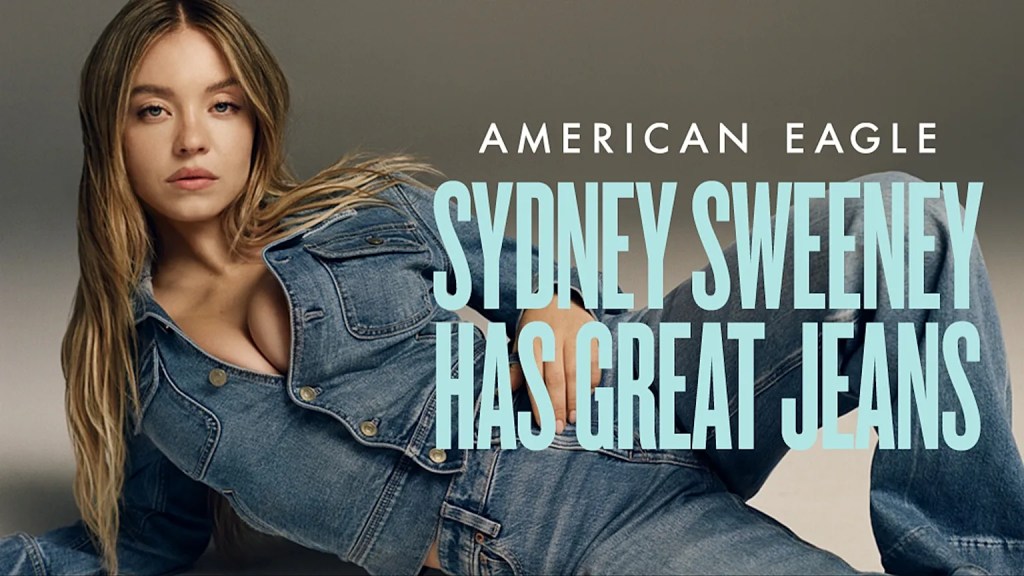
Everyone remembers the ad. Not everyone remembers why it blew up the way it did.
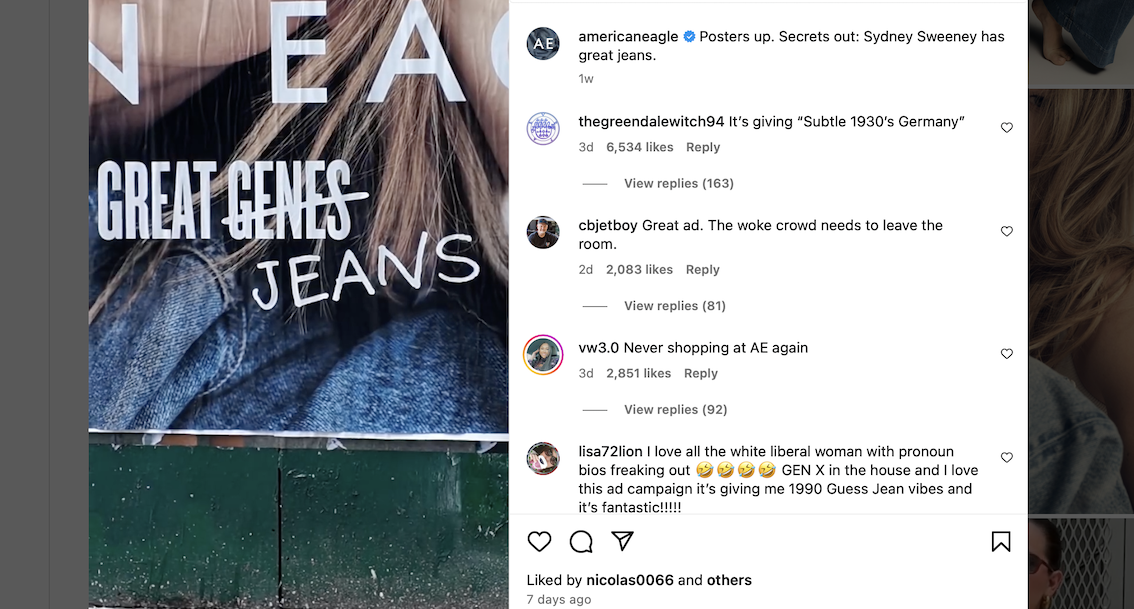
In July 2025, American Eagle launched “Sydney Sweeney Has Great Jeans” across TV, billboards, and a charity product, the Sydney Jean (American Eagle Outfitters, 2025). The campaign played on “jeans” sounding like “genes,” pairing lines about Sweeney’s jeans with lines about inherited traits like eye colour. Critics argued the wordplay echoed eugenics-era rhetoric about “good genes,” reading it as coded praise for whiteness at a moment of heightened sensitivity around race in the US. Yet Variety (2025) reported the jeans sold out within a week and AE’s stock jumped almost 25% in a day. What’s less obvious is why a profitable campaign still detonated a backlash, and that comes down to one decision most commentary missed: what role American Eagle gave Sweeney.
A Value Chain That Mostly Worked
Leung, Gu, and Palmatier’s (2022) Influencer Marketing Value Chain argues a campaign only truly works if it creates value for the firm, the influencer, and the platform at once. American Eagle’s STP logic was sound: positioning itself as the “#1 jeans brand for Gen Z” through Sweeney’s already Gen Z-heavy fanbase (AEO-Inc, 2025). On equity metrics, this was a clean short-term win: sold-out inventory, a stock spike, a 2026 sequel. That’s strong influencer campaign value, though not necessarily long-term perceived value.

When the Message Isn’t the Influencer’s
The theory also says customer perceived value weakens when audiences sense a message came from the brand’s boardroom, not the influencer’s voice. That fits here: coverage describes AE’s creative team as authoring the tagline (WWD/AEO-Inc, 2025), and criticism largely targeted American Eagle’s judgement rather than Sweeney personally (NPR, 2025). A firm can hit every equity metric and still weaken perceived authenticity, because those aren’t the same win.
Why the Role Mattered
Rundin and Colliander’s (2021) Influencer Roles Typology maps relationships by product creation control and content creation control. The ad’s central execution resembles the billboard subrole: AE controlled the words, Sweeney supplied the face. Billboard is high-reward, high-risk by design, since a scripted message leaves nothing for audiences to attribute a misfire to except the brand.
Usefully, the campaign wasn’t one role throughout: Sweeney also co-designed the Sydney Jean (AEO-Inc, 2025), a genuine codesigner layer with real product control. That product drew noticeably less backlash than the central messaging (NPR, 2025; NBC News, 2025), suggesting the two subroles distributed risk very differently within one partnership.
Sweeney also stayed publicly quiet for months, addressing it only in a GQ interview in early November 2025 (NBC News, 2025). This can be read through the billboard lens too: with limited control over the original message, she had less ready ownership of the narrative once backlash hit, unlike an ambassador who builds an ongoing personal voice.
The Platform’s Role
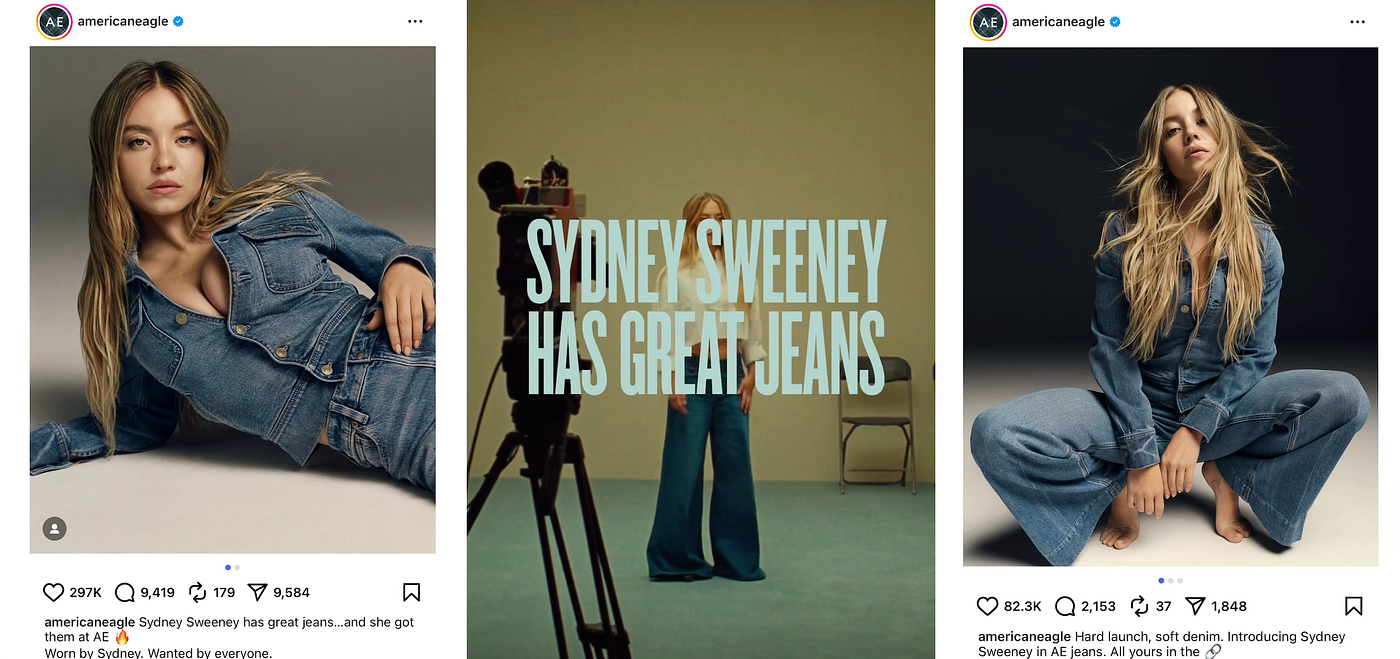
The course’s user equity concept says platforms curate for engagement, suppressing hard-selling content. This case suggests an extension: if engagement itself is rewarded, highly debated content may spread through the same mechanism as genuinely enjoyable content. That’s an inference from the theory, not something it states outright, but it implies platform curation may not distinguish visibility earned by enjoyment from visibility earned by controversy.
Verdict
This backlash looks foreseeable once viewed through the roles typology: a billboard role concentrates risk on the brand. AE’s outcome looks less like bad luck and more like a mismatch between a tightly scripted role and an edgy message.
American Eagle won commercially, but “won on equity metrics” and “won on trust” are different scoreboards. Match the influencer role to the risk: save billboard-style content for safe messaging, and give influencers enough content control that risk has somewhere to land besides the brand’s logo.


Leave a Reply